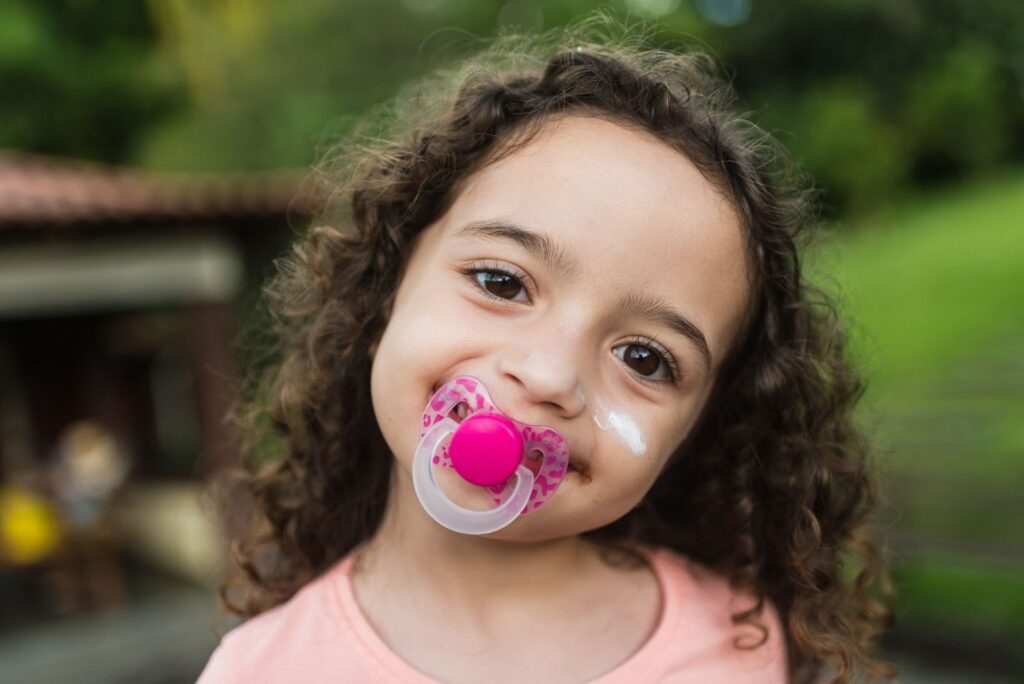
For many parents, a pacifier can feel like a small lifesaver—soothing a fussy baby, helping with sleep, and offering comfort in unfamiliar moments. But like many parenting tools, it comes with both benefits and considerations. Understanding when and how to use a pacifier—and when to let it go—can help you make the best decision for your child.
The Benefits of Using a Pacifier
Pacifiers can play a helpful role, especially during infancy:
- Soothing & self-regulation: Babies are born with a natural sucking reflex, and pacifiers can help them calm down and feel secure.
- Better sleep: Many babies fall asleep more easily with a pacifier and may settle themselves back to sleep using it.
- Reduced risk of Sudden Infant Death Syndrome (SIDS) for children under 1 year: Research suggests that using a pacifier during sleep may lower the risk when used safely.
- Temporary comfort: Helpful during vaccinations, travel, or transitions like starting daycare or nursery.
The Drawbacks to Consider
While pacifiers can be useful, overuse or prolonged use may lead to challenges:
- Dependency: Some children may struggle to sleep or settle without it.
- Ear infections: Frequent use beyond infancy has been linked to a higher risk of ear infections.
- Dental concerns: The American Academy of Pediatrics recommends offering a pacifier only at sleep time during the first year. Extended use, most likely will reshape the inside of the mouth which can affect how the teeth meet when biting and may develop a cross bite.
- Speech development: Constant use during the day may limit opportunities for babbling, talking, and interaction.
When Should You Stop Using a Pacifier?
There’s no exact “one-size-fits-all” age, but general guidance includes:
- 0–6 months: Pacifiers can be used as needed for soothing and sleep.
- 6–12 months: Begin limiting use to sleep times only.
- 12–24 months: Gradually reduce reliance; encourage other comfort methods.
- By age 2–3: It’s best to fully wean off the pacifier to avoid dental and speech issues.
Gentle Tips for Weaning Off the Pacifier
Letting go of the pacifier doesn’t have to be stressful:
- Start gradually: Limit use to specific times (like bedtime).
- Offer alternatives: A favorite toy, cuddly blanket, or extra hugs can replace comfort.
- Create a goodbye ritual: Some families find success with a “pacifier fairy” or a special moment to say goodbye.
- Stay consistent: Mixed messages can make it harder for children to adjust.
A Note from Cuddles
At Cuddles, we understand that every child is unique. We work closely with parents to follow consistent routines—whether it’s introducing a pacifier or gently phasing it out—so children feel secure both at home and in our care.
Finding the right balance is key. Used thoughtfully, a pacifier can be a helpful tool in your parenting journey—but knowing when to step away from it is just as important for your child’s healthy development.