

Few moments are harder for a parent than leaving a crying child at nursery. It can leave you wondering if you are making the right decision, whether your child is happy, or if you should stop bringing them altogether.
The team at Cuddles Childcare have spent more than 25 years working with young children and have supported more than 40 families through separation anxiety at drop-off. One thing we have learned is that separation anxiety is a normal part of development, especially when a child is experiencing their first time away from a parent.
The good news? With time, patience, consistency, and the right support, most children adjust beautifully.
Why Do Children Experience Separation Anxiety?
In our experience, the most common reasons include:
- It is the child’s first time being away from a parent.
- A parent is feeling anxious, and the child picks up on those emotions.
- Changes at home, such as the arrival of a new baby or a pregnancy.
- Major changes in routine or environment.
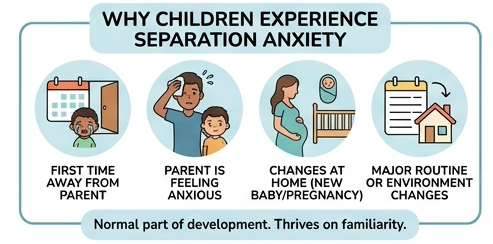
Children thrive on familiarity and predictability. When they enter a new environment with new people and new routines, it is natural for them to need time to adjust.
How We Help Children Adapt at Cuddles
At Cuddles, we follow a smooth adaptation process designed to help children feel safe and comfortable.
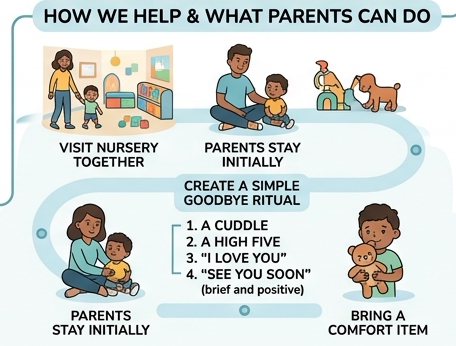
Before starting, we invite the child to visit the nursery with their parent. This allows them to become familiar with the environment, meet the staff, and explore the space while feeling secure.
Parents initially stay with their child, and the adaptation process is adjusted according to each child’s individual needs. Some children settle quickly, while others need more time. We believe every child deserves an approach that respects their personality and pace.
The Biggest Mistakes Parents Make During Drop-Off
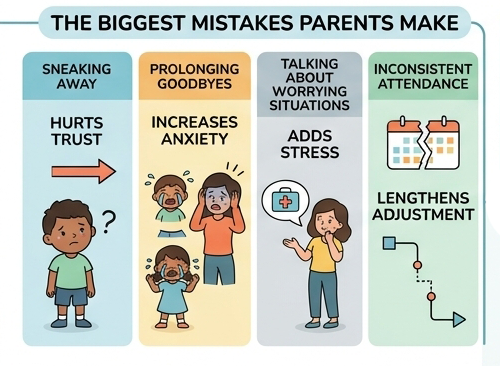
Over the years, I have noticed a few common mistakes that can unintentionally make separation anxiety more difficult.
- Sneaking Away: Some parents leave without saying goodbye because they want to avoid upsetting their child. While understandable, this can damage trust.
Children need to know that when a parent leaves, they will always return. A simple, honest goodbye helps build that trust. - Prolonging the Goodbye: Long goodbyes often increase anxiety for both the parent and child. A quick, confident farewell is usually much easier than multiple hugs, tears, and repeated departures.
- Talking About Worrying Situations: Avoid conversations that may increase your child’s concerns. For example, saying, “Mommy has to go to the doctor, so you have to stay here,” may create additional worry. Instead, keep the message simple, positive, and reassuring.
- Inconsistent Attendance: Children adjust more easily when they attend regularly. Frequent interruptions can make the adaptation process longer because children have to repeatedly readjust to the routine.
What Should Parents Say at Drop-Off?
Children benefit from consistency.
We often encourage parents to create a simple goodbye ritual that is repeated every day and agreed upon with the child.
A goodbye routine might include:
- A cuddle
- A high five
- “I love you”
- “Have a wonderful day”
- “See you soon”
Keep it warm, predictable, and brief.
A Strategy That Often Helps
One approach that has helped many children is allowing them to bring a favorite comfort item from home, such as a stuffed animal or special toy.
These familiar objects provide emotional security during the transition.
In some cases, it can also help if drop-off is handled by the parent to whom the child is slightly less attached, particularly during the initial adjustment period.
“My Child Cries Every Morning. Does That Mean They’re Unhappy?”
This is one of the questions parents ask most often.
In many cases, the crying lasts only a few minutes after drop-off. Once children are comforted and engaged in activities, they begin to settle and enjoy their day.
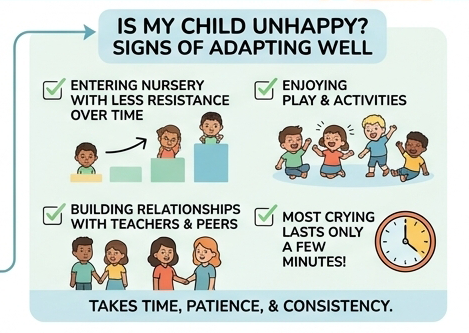
Signs that a child is adapting well include:
- Entering the nursery with less resistance over time
- Enjoying play and activities
- Eating meals comfortably
- Building relationships with teachers and peers
- Sharing experiences from their day with their parents
It is important to remember that both children and parents need time to adjust. In our experience, it often takes around a month for everyone to feel comfortable with the new routine.
When Should Parents Be Concerned?
While some tears at drop-off are normal, parents should seek additional support if a child:
- Continues to refuse entering the nursery over an extended period
- Appears consistently unhappy throughout the day
- Remains distressed at pickup time
- Shows no signs of gradually settling into the environment
Open communication between parents and caregivers is essential in these situations.
Working Together as a Team
At Cuddles, we believe that supporting a child through separation anxiety is a partnership between parents and educators.
When concerns arise, we take the time to talk with parents and understand what may be worrying the child. Sometimes there are changes happening at home or specific situations affecting their emotional well-being.
Together, we can develop strategies that help the child feel secure and supported during the transition.
We also remind parents to think about the reason they chose childcare in the first place. Whether it is social development, independence, learning opportunities, or family needs, those long-term benefits remain important even when the first few weeks are challenging.
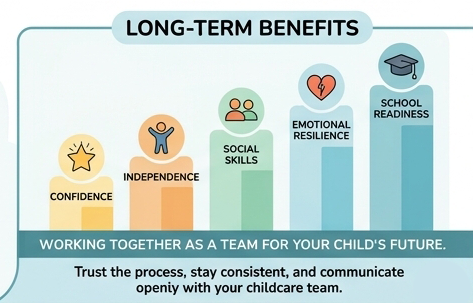
The Long-Term Benefits
When children successfully work through separation anxiety, they develop valuable life skills that extend far beyond nursery.
They gain:
- Confidence
- Independence
- Social skills
- Emotional resilience
- School readiness
Most importantly, they learn that they are capable of navigating new experiences and building trusting relationships outside their immediate family.
A Final Thought
If there is one thing I have learned after more than 25 years working with young children, it is this:
It takes time, patience, and consistency.
And remember:
A difficult goodbye doesn’t mean a difficult day.
Many children who cry at the door are happily playing just minutes later. Trust the process, stay consistent, and work closely with your childcare team. Together, we can help children build the confidence they need to thrive.