Communication begins before words.
Your toddler’s pointing, gestures, sounds, facial expressions, and attempts to get your attention are all early forms of communication.
Once we learn to recognize those attempts, we can begin turning everyday moments into opportunities for language.
And the good news?
You don’t need expensive toys, special equipment, or formal speech lessons.
Your everyday life is full of opportunities to help your toddler communicate.
Make Everyday Routines a Conversation
Some of the best language-learning moments happen during activities you already do every day.
While getting dressed:
“What do you want to wear today? Red shirt or green shirt?”
“Where are your shoes?”
“Let’s put your socks on.”
During meals:
“Do you want banana or apple?”
“More water?”
“The spoon is on the table.”
During bath time:
“Water!”
“Wash your hands.”
“Where is the duck?”
You are giving your child repeated exposure to words and showing them how language connects to real experiences.
Ask Simple Questions—But Don’t Turn It Into a Test
Questions can encourage communication, but too many questions can make an interaction feel like an examination.
Keep them simple and natural:
- “What is this?”
- “Where is the ball?”
- “Who is that?”
- “Which one do you want?”
- “What are you eating?”
Then give your toddler time to respond.
Remember:
The goal is conversation, not testing.
If your child doesn’t answer, you can answer naturally yourself and continue the interaction.
Expand What Your Child Says
When your toddler uses a word, don’t simply correct them.
Build on it.
If your child says:
“Car.”
You can say:
“Yes! A red car.”
If they say:
“Dog.”
You can respond:
“Yes, the dog is running.”
If they say:
“More.”
You might say:
“More banana? You want more banana.”
This gives your child a slightly richer version of the language they are already beginning to use.
Read Together
You don’t need to read every word on every page.
Look at the pictures.
Point.
Name things.
Ask simple questions.
Let your child turn the pages.
If you see a picture of a dog, say:
“Dog! Look at the dog.”
Then pause.
“Where’s the dog?”
If your child points, respond:
“There he is!” Under the Tree
Reading together isn’t only about learning words.
It’s about shared attention, listening, interaction, and connection.
Sing and Use Actions
Songs can make language easier and more memorable because they combine words with rhythm, repetition, movement, and fun.
Sing simple songs together.
Add actions.
Pause before a familiar word and give your child a chance to participate.
Even if your toddler doesn’t say the whole word, a sound, gesture, or movement is an attempt to communicate.
Celebrate the attempt.
Play Pretend
Pretend play creates endless opportunities for language.
Pretend to cook.
Feed a doll.
Give a teddy bear a bath.
Play with toy animals.
Pretend to go shopping.
You can describe what is happening:
“Baby is hungry.”
“Give baby food.”
“More soup?”
“Baby is sleeping.”
Your child doesn’t need to repeat every sentence.
They are listening, watching, understanding, and gradually learning how language works.
Let Your Child Help You
Some of the best language activities don’t look like activities at all.
Invite your toddler to help with simple household tasks.
Ask them to:
- Put the spoon on the table.
- Bring your shoes.
- Put the toy away.
- Give you the towel.
- Choose between two shirts.
- Help put things into a bag.
Then talk about what you’re doing.
These activities give language a purpose.
Your child isn’t simply repeating words.
They’re using communication to participate in real life.
Get Outside and Talk About What You See
A walk can become a language activity.
Talk about:
- Cars
- Trees
- Birds
- Dogs/ Cats
- People
- Colours
- Sounds
- Weather
You might say:
“Look! A big bus.”
“The cat is eating.”
“Can you hear the bird?”
Simply notice things together.
Give Your Toddler Opportunities to Play With Other Children
Language is not learned only from adults.
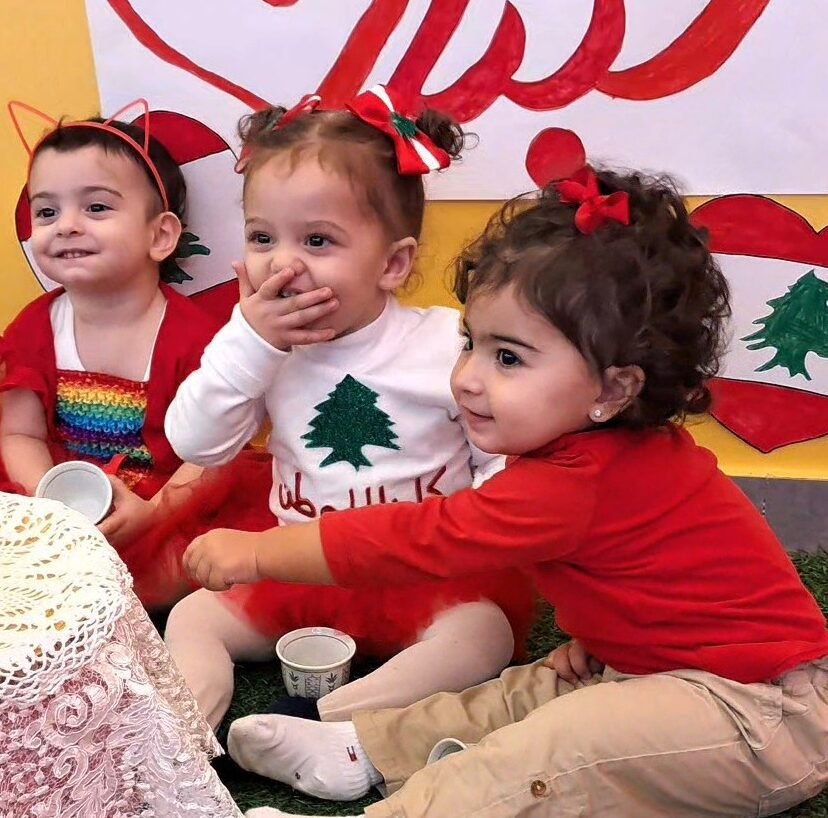
Children also learn through watching, copying, taking turns, negotiating, laughing, and playing with other children.
A park, playgroup, play area, or childcare environment can create natural reasons to communicate.
Sometimes a child who is relatively quiet around adults becomes much more motivated to communicate when another child wants the same toy.
That motivation to connect can create powerful opportunities for language.
Reduce Passive Screen Time
Screens can easily become a substitute for interaction.
A child may hear hundreds of words while watching a program, but language development depends heavily on opportunities for back-and-forth communication.
A screen doesn’t wait for your toddler to answer.
It doesn’t look at their face and respond to their gesture.
It doesn’t change the conversation according to what your child is trying to communicate.
Real people do.
That is why, at Cuddles, we encourage parents to keep passive screen time limited and prioritize:
- Talking
- Playing
- Reading
- Singing
- Exploring
- Pretend play
- Outdoor activities
- Interaction with other children
For very young toddlers, our preference is no screen time.
And remember: you don’t need expensive toys.
Your interaction is the most valuable tool your child has.
A Cuddles Story
I remember a two-year-old who came to our attention because he was mainly communicating through pointing and what sounded like gibberish. He was also not socializing much with the other children.
We met with the parent and talked about something very simple but powerful:
Translating the child’s communication into words.
We encouraged the parent to describe what the child was doing and saying throughout the day and to use proper vocabulary.
We also discussed reducing screen time because it was taking away from opportunities for active interaction.
The parent began spending more quality time with the child, encouraging interaction with children of the same age and giving the child more opportunities to communicate.
We also advised the parent to speak with the pediatrician and consider whether something physical, such as fluid in the ears, could be affecting hearing and therefore speech.
Gradually, we saw a beautiful change.
The child began using more words, started playing with friends, and had fewer tantrums because he was becoming better able to communicate what he wanted.
Even more special was watching his friends begin to look for him because they wanted to play with him.
For me, this is an important reminder:
Sometimes the change isn’t simply about “getting a child to talk.”
It is about helping a child connect, communicate, participate, and be understood.
Coming Next
But there is another side to this conversation.
Every child develops differently, and parents can easily become worried when their toddler isn’t talking as much as another child.
So how do you know what is simply individual variation—and when should you seek professional advice?
Check Is My Toddler Talking Enough? When to Wait, When to Worry, and When to Seek Help