

Night waking is one of the most common concerns for parents—especially in the early years. If you’re finding yourself up multiple times a night, wondering what your child needs or if you’re doing something wrong, you’re not alone. At Cuddles, we speak with parents every day who are navigating the same challenge. The good news? Night waking is normal—and manageable with the right approach.
Why Do Children Wake at Night?
Children wake for many reasons, and these often change with age:
- Infants (0–12 months): Hunger, need for comfort, or adjusting to sleep cycles
- Toddlers (1–3 years): Separation anxiety, teething, or developmental milestones
- Preschoolers (3–5 years): Nightmares, fears, or changes in routine (like starting nursery or daycare) Understanding why your child is waking is the first step toward helping them—and yourself—get better rest.
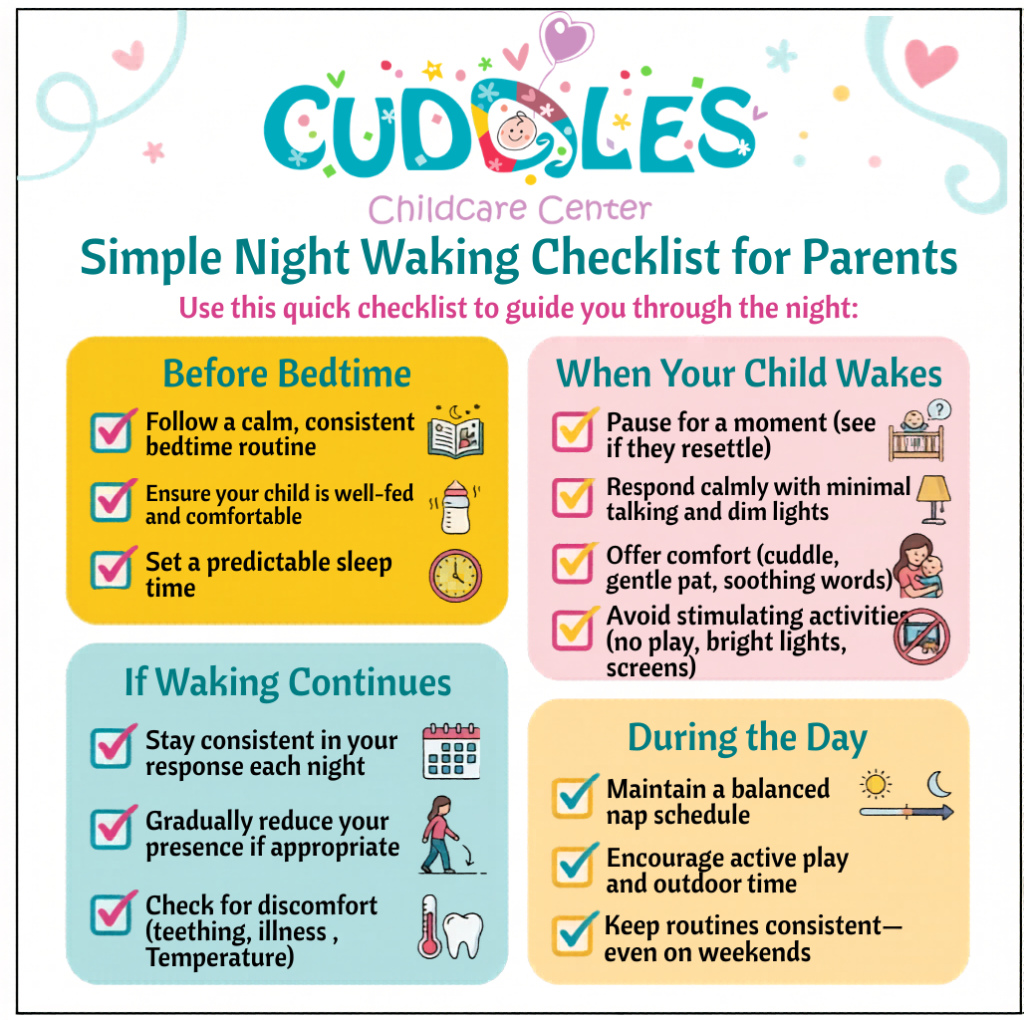
How do you respond when your child wakes up?
- Keep interactions calm and quiet *Use a soft voice, dim lights, and minimal stimulation
- Offer reassurance, not playtime
- A gentle cuddle, a few soothing words, or a pat can help them settle without fully waking up
- Be consistent, children feel secure when responses are predictable
At Cuddles, we often remind parents that consistency builds confidence—even during the night.
Create a Strong Bedtime Foundation
Night waking often improves when bedtime routines are solid:
- A predictable routine (bath → story → cuddle → sleep)
- A consistent bedtime and wake-up time
- A calm sleep environment (cool, dark, quiet) Children who feel secure at bedtime are more likely to resettle themselves during the night.
Check our detailed article Peaceful Nights Start Here:
Teach Gentle Self-Soothing
As children grow, they can learn to fall back asleep independently:
*Give them a moment before responding to see if they settle
*Introduce a comfort object (like a soft toy or blanket, if age-appropriate)
*Gradually reduce your presence over time (for example, sitting farther from the bed each night) This doesn’t mean ignoring your child—it means supporting them in building an important life skill.
When to Take a Closer Look
Sometimes frequent night waking may need extra attention:
- Your child seems uncomfortable or in pain
- Waking is increasing rather than improving
- Daytime behavior is affected (excessive tiredness, irritability) In these cases, it’s always best to check with your pediatrician.
You’re Not Alone
At Cuddles, we understand how exhausting night waking can be—especially when you’re balancing work, home, and possibly nursery or daycare routines. Our team supports children throughout the day in ways that encourage healthy sleep habits, from structured routines to emotional reassurance. Better nights don’t happen overnight—but with patience, consistency, and the right support, they do come.
A Gentle Reminder for Parents
There’s no one “perfect” way to handle night waking. What matters most is that your child feels safe, loved, and supported—and that you feel confident in your approach. If you ever feel unsure, reach out. Sometimes, a small adjustment can make a big difference—for both you and your little one.